






Marine Heat Exchanger Service & Repair
Repair your marine diesel heat exchanger today and avoid worsening damage to your engine. AHI Marine offers refurbishment & marine heat exchanger rebuilds in Australia. 25+ years experience providing professional marine mechanical services.
Common Heat Exchanger Servicable Items
AHI Marine services both plate and shell & tube heat exchangers and their components.
- Tube Bundle
- Heat Exchanger Tubes
- End Caps
- Sacrificial Anodes
- Gaskets and Seals
- Heat Exchanger Housing
- Header Plates
- Coolant Passages
- Seawater Passages
- Protective Coatings
Boat Heat Exhanger Brands We Service & Repair
AHI marine services Yanmar, Bowman, Sen-Dure, Mota, Diecon, Savage marine heat exchangers. We also service OEM heat exchangers on popular Volvo, Penta, Westerbeke, Yanmar, Cummins, Caterpillar & Perkins engines.
Marine Heat Exchanger Maintenance
Maintain your vessels marine mechanical components and prevent costly breakdowns.

Prevent Tube Bundle Corrosion

Remove Biofilm and Biofouling

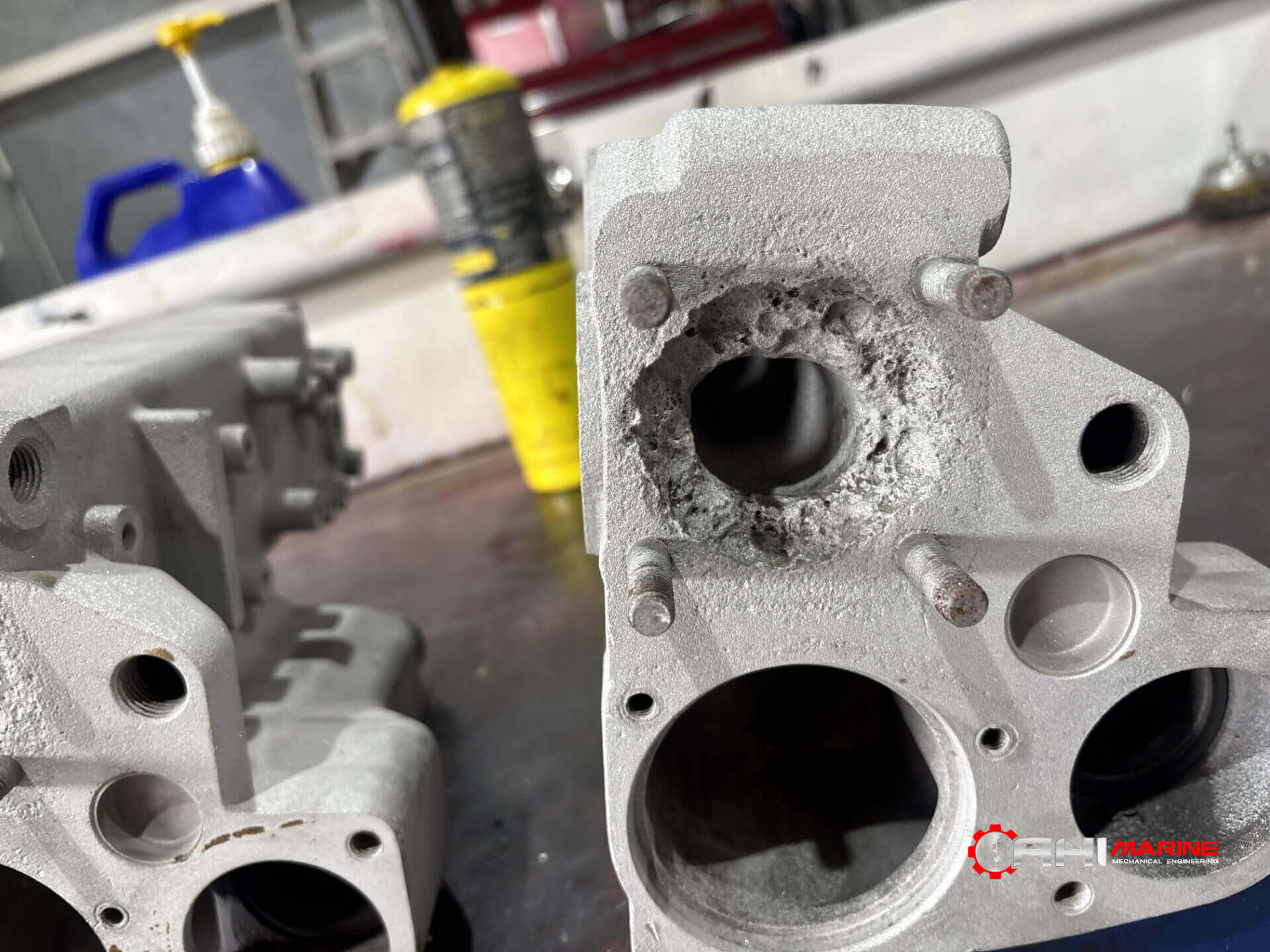
Repair End Cap and Housing Deterioration
Heat Exchanger Refurbishment
Give your heat exchanger a new lease of life at fraction of cost by choosing refurbishment and re-manufacturing over straight replacement. Our state of the art facility is able to re-engineer heat exchangers reducing cost and turnaround time.


- Schedule Call: remotely diagnose your heat exchanger wear and tear, and schedule maintenance.
- Arrange heat exchanger: remove manifold from vessel and send heat exchanger to AHI Marine via palletised transport.
- Local vessels: in situ diagnostics performed in The Boatworks and Gold Coast City Marina.
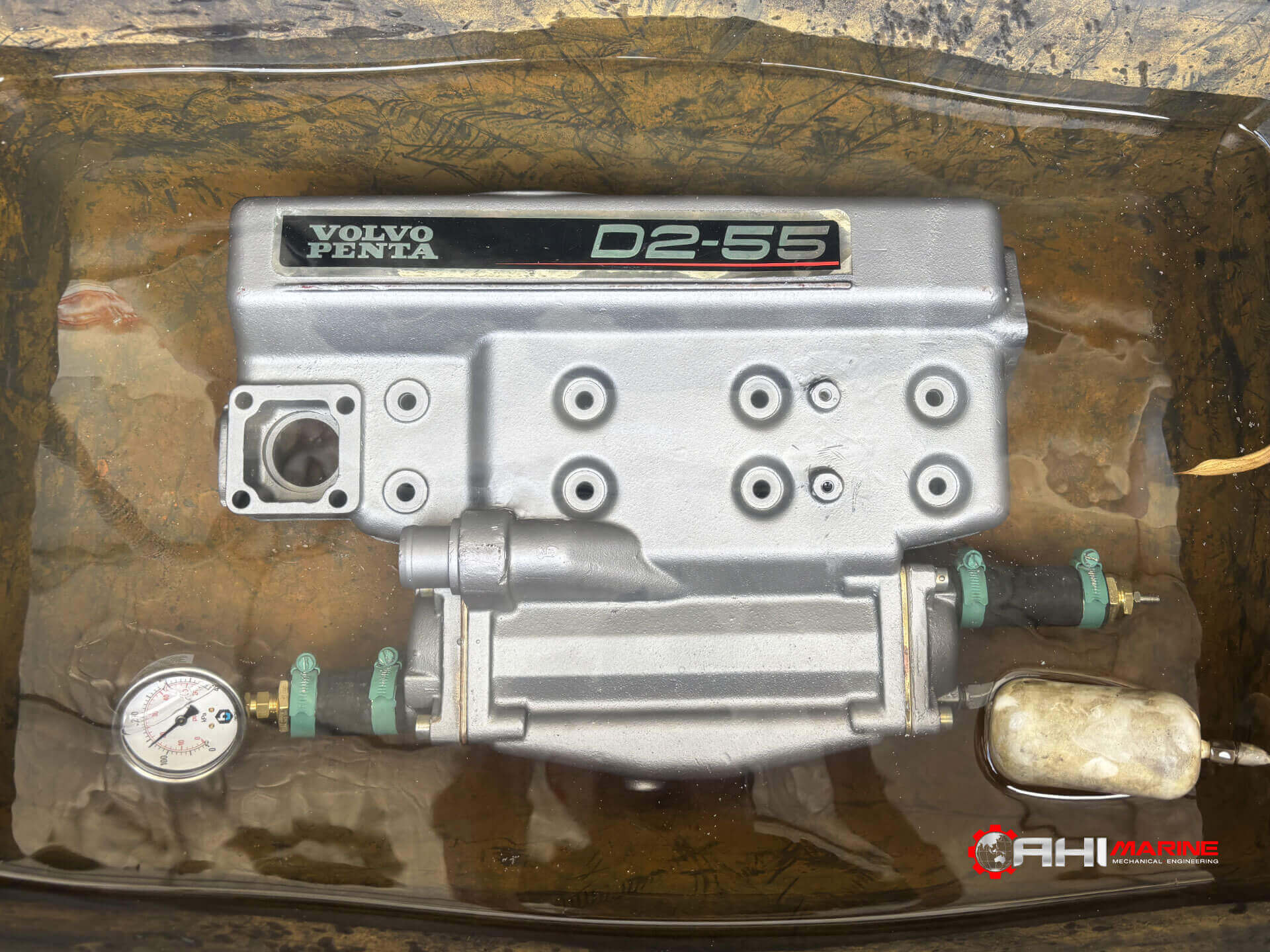
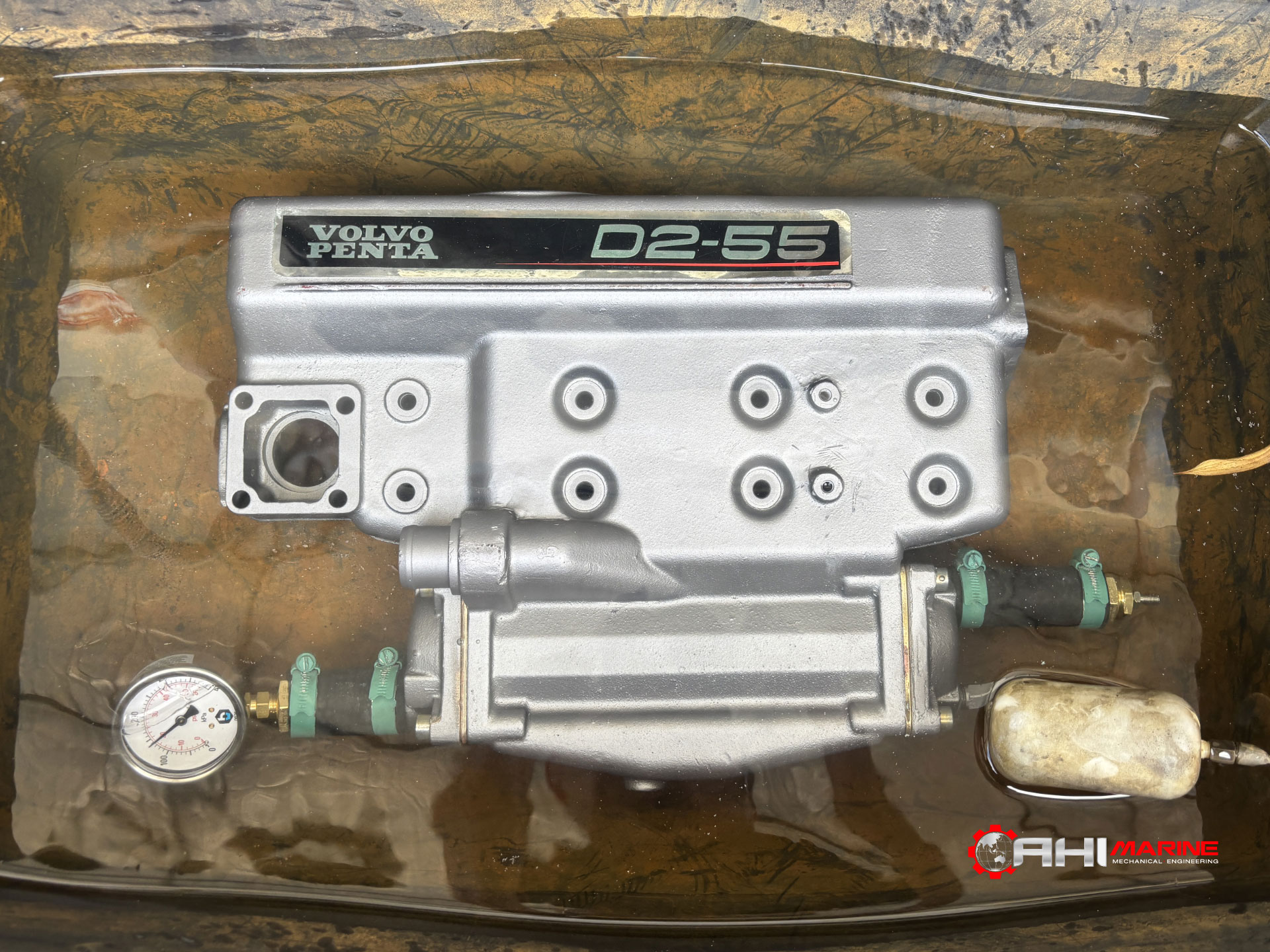
- Servicing and repair: marine heat exchanger repairs include descaling, acid flushing, mechanical cleaning and pressure testing.
- Remanufacturing: moderately corroded parts benefit from AHI Marine comprehensive remanufacturing process (disassembly, acid bath, die grinding, sandblasting, cleaning, rebuilding, ceramic coating, reassembly).
- Replacement: severely corroded parts are reordered from manufacturers.
- Ceramic coat both remanufactured and replaced parts.
- Return to vessel.
Discover what our satisfied clients are saying about us.

We've chosen AHI Marine for several years now to maintain our vessel and Volvo IPS 950s. Nothing is a problem as they always have a solution.


We engaged AHI Marine to complete a major refit on our power cat. Work was completed in all areas of mechanical, electrical and hydraulic systems.

We really appreciate the professionalism, skill and can-do attitude.

You went out of your way to fix the issues and had the right network of local contacts where required!
I’ll be in contact again the next time we are sailing through the region..

20+
500+
Easily find us at
The Boat Works
1 Boatworks Dr, Coomera, 4209
Opening times:
Mon - thurs: 8am - 4pm
Fri: 8am - 2pm

Schedule your
call back today.
Opening Times
Mon - thurs: 8am - 4pm
Fri: 8am - 2pm
Heat Exhanger FAQs
What are the common signs that a marine heat exchanger needs servicing or repair?
Common warning signs include engine overheating, reduced cooling water flow, corrosion, pitting, scale deposits and recurring raw water impeller failures. AHI Marine provides heat exchanger inspections, cleaning and repairs to restore cooling performance.
What causes marine heat exchangers to become blocked?
Common causes include marine growth, biofilm, algae, calcium deposits, scale, sand and debris accumulating inside the tube bundle and seawater passages. AHI Marine provides chemical cleaning, descaling and tube cleaning to restore water flow.
What is biofilm and why is it harmful to a marine heat exchanger?
Biofilm is a layer of microorganisms, including bacteria, algae and fungi, that builds up on internal heat exchanger surfaces. It restricts water flow, reduces heat transfer and accelerates corrosion. Regular professional cleaning helps prevent damaging accumulation.
What is microbial influenced corrosion (MIC) in a marine heat exchanger?
Microbial influenced corrosion (MIC) occurs when microorganisms accelerate corrosion on internal metal surfaces. It can cause pitting, crevice corrosion and deterioration of heat exchanger tubes and housings. AHI Marine provides inspection, cleaning and remanufacturing to address corrosion damage.
How often should a marine heat exchanger be serviced?
AHI Marine recommends removing, inspecting, cleaning and pressure testing the heat exchanger manifold every two years. Regular servicing helps identify corrosion, remove deposits and prevent cooling system failures. Schedule your next heat exchanger service with AHI Marine.
Can you rebuild a heat exchanger?
Yes. AHI Marine rebuilds heat exchangers at The Boatworks, Gold Coast. Send your heat exchanger from anywhere in Australia. Save time and money by refurbishing your corroded heat exchanger with our professional service.
Common Heat Exchanger Wear & Tear
Heat exchanger tube bundle corrosion and deterioration
Marine heat exchanger tube bundle
Also known as: heat exchanger tubes, tube stack, tube bundle, cooling tubes and tube core.
The tube bundle transfers heat between the engine coolant and seawater cooling circuits. Internal corrosion, pitting, scale deposits and restricted passages reduce heat transfer efficiency and can lead to overheating or coolant contamination.
AHI Marine inspects marine heat exchanger tube bundles for corrosion, blockages, pitting and deterioration. Arrange professional heat exchanger cleaning, descaling, pressure testing and tube bundle repairs in Australia.
Biofilm and biological fouling
Marine heat exchanger internal surfaces
Also known as: biofilm, biological fouling, microbial deposits, bacterial growth and organic fouling.
Biofilm develops when microorganisms accumulate on internal heat exchanger surfaces. These deposits restrict water flow, reduce heat transfer and contribute to corrosion within the cooling system.
AHI Marine removes biofilm and biological deposits from marine heat exchangers. Book professional cleaning and servicing to improve cooling efficiency and help prevent recurring fouling.
End cap corrosion and deterioration
Marine heat exchanger end caps
Also known as: end covers, header covers, water box covers and heat exchanger end plates.
End caps direct seawater through the heat exchanger tube bundle. Corrosion, pitting and damaged sealing surfaces can cause leaks and reduce cooling system performance.
AHI Marine inspects heat exchanger end caps for corrosion, damage and leakage. Arrange end cap cleaning, repairs or replacement and restore the integrity of your cooling system.
Gasket and seal deterioration
Heat exchanger gaskets and sealing components
Also known as: end cap gaskets, rubber seals, O-rings, sealing rings and water box gaskets.
Gaskets and seals prevent coolant and seawater from leaking between heat exchanger components. Ageing, compression, corrosion and incorrect installation can cause leaks and allow unwanted fluid transfer.
AHI Marine checks heat exchanger gaskets and seals for deterioration, leaks and sealing failure. Schedule your heat exchanger service and have worn sealing components replaced.
Scale and mineral deposits
Heat exchanger tube scaling
Also known as: calcium deposits, mineral scale, limescale, salt deposits and internal scaling.
Mineral deposits accumulate on internal tube surfaces and restrict the flow of cooling water. Scaling reduces heat transfer efficiency and can contribute to engine overheating.
AHI Marine removes scale and mineral deposits from marine heat exchangers through professional cleaning and descaling. Restore cooling water flow and book your heat exchanger service today.
Microbial influenced corrosion (MIC)
Heat exchanger internal corrosion
Also known as: MIC, microbiologically influenced corrosion, microbial corrosion and bacteria-induced corrosion.
Microbial influenced corrosion occurs when microorganisms accelerate the deterioration of metal surfaces. It can cause localised pitting, corrosion damage and premature failure of heat exchanger tubes and housings.
AHI Marine inspects heat exchangers for signs of microbial influenced corrosion and internal deterioration. Arrange an assessment, professional cleaning and repair before corrosion causes more extensive damage.
Heat exchanger housing corrosion
Marine heat exchanger body and casing
Also known as: heat exchanger housing, exchanger casing, shell, body and coolant housing.
The housing contains the heat exchanger assembly and separates the cooling circuits. External and internal corrosion, pitting and damaged surfaces can compromise structural integrity and cause leaks.
AHI Marine assesses heat exchanger housings for corrosion, deterioration and leakage. Book an inspection and discuss housing repairs, refurbishment or replacement.
Seawater passage blockages
Raw water passages and cooling channels
Also known as: seawater passages, raw water channels, cooling water passages, water galleries and intake passages.
Seawater passages carry raw water through the heat exchanger. Marine growth, debris, sediment and biological deposits can restrict water flow and reduce cooling capacity.
AHI Marine inspects and cleans seawater passages to remove blockages and accumulated deposits. Schedule a heat exchanger service to restore unrestricted cooling water flow.
Sacrificial anode deterioration
Heat exchanger zinc anodes
Also known as: zinc anodes, pencil anodes, engine anodes, sacrificial anodes and corrosion protection anodes.
Sacrificial anodes protect metal components within the cooling system against galvanic corrosion. They gradually deteriorate during operation and require regular inspection and replacement.
AHI Marine checks heat exchanger anodes for corrosion and material loss. Book your heat exchanger maintenance and have deteriorated anodes replaced to protect your cooling system.
Pressure and coolant leakage
Heat exchanger pressure integrity
Also known as: pressure testing, coolant leaks, seawater leaks, internal leakage and heat exchanger leak testing.
Corrosion, cracked tubes, damaged joints and failed seals can compromise heat exchanger pressure integrity. Leaks may allow seawater and engine coolant to mix or cause a loss of cooling system pressure.
AHI Marine pressure tests marine heat exchangers to identify leaks and assess their condition. Arrange professional testing, repairs and servicing to keep your engine cooling system operating reliably.