


Hidden Dangers of Portable Boat Generators
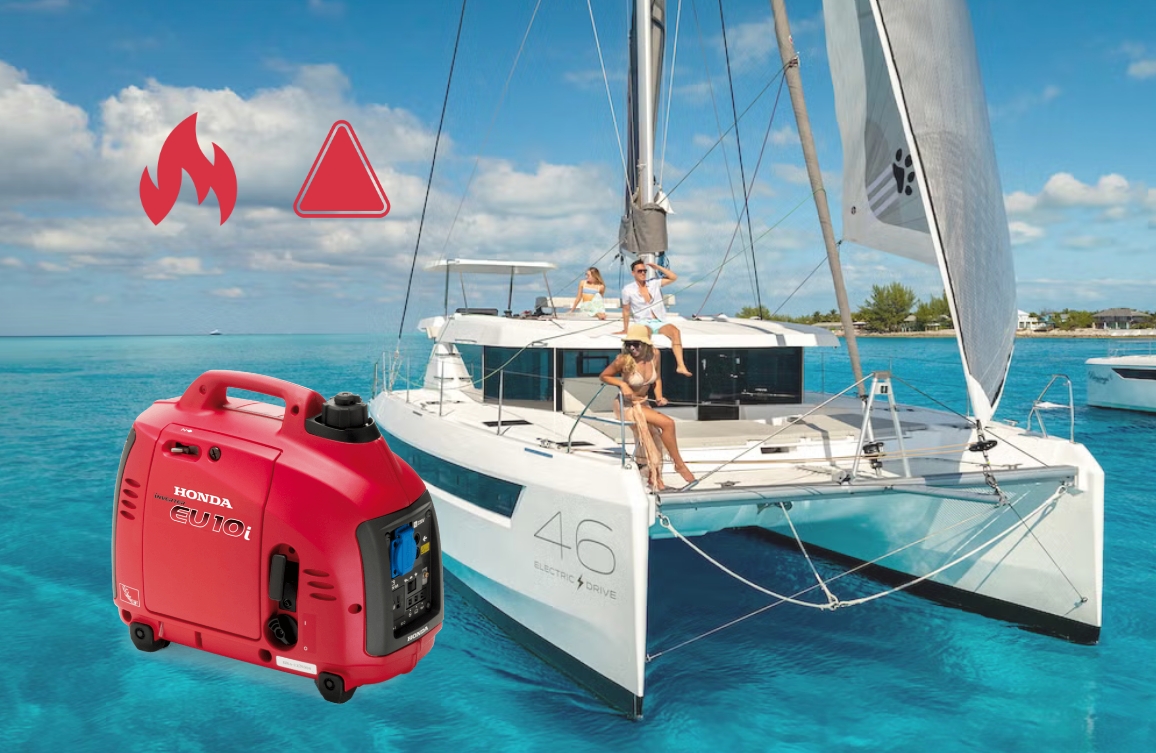
With summer on its way boats are leaving shore, batteries and portable devices are running low on electricity while at sea, and the temptation is to bring along a portable boat generator to power chargers and appliances.
Using a portable generator on board can be dangerous, putting lives at risk. Using a portable generator on board involves four primary safety and operational risks.
Speak to marine generator specialist
1. Carbon Monoxide (CO) Poisoning
- The Risk: Gasoline and diesel generators produce carbon monoxide (CO), an odourless, colorless, and deadly gas.
- The Hazard: Exhaust fumes can easily drift into the boat's cabin, hatches, vents, or get trapped between hulls on catamarans and houseboats, causing unconsciousness or death within minutes.
2. Fire and Explosion Hazards
- The Risk: Portable generators run on flammable fuels like gasoline and diesel.
- The Hazard: Spilled fuel, hot engine surfaces, refueling accidents on a rocking deck, or fuel leaks can easily trigger fires or explosions. Furthermore, many portable units lack ignition-protected components required to safely operate around flammable marine vapours.
The mishandling of petrol and leaking fuel from generators have resulted in serious accidents and that have gravely injured those on board and destroyed boats.
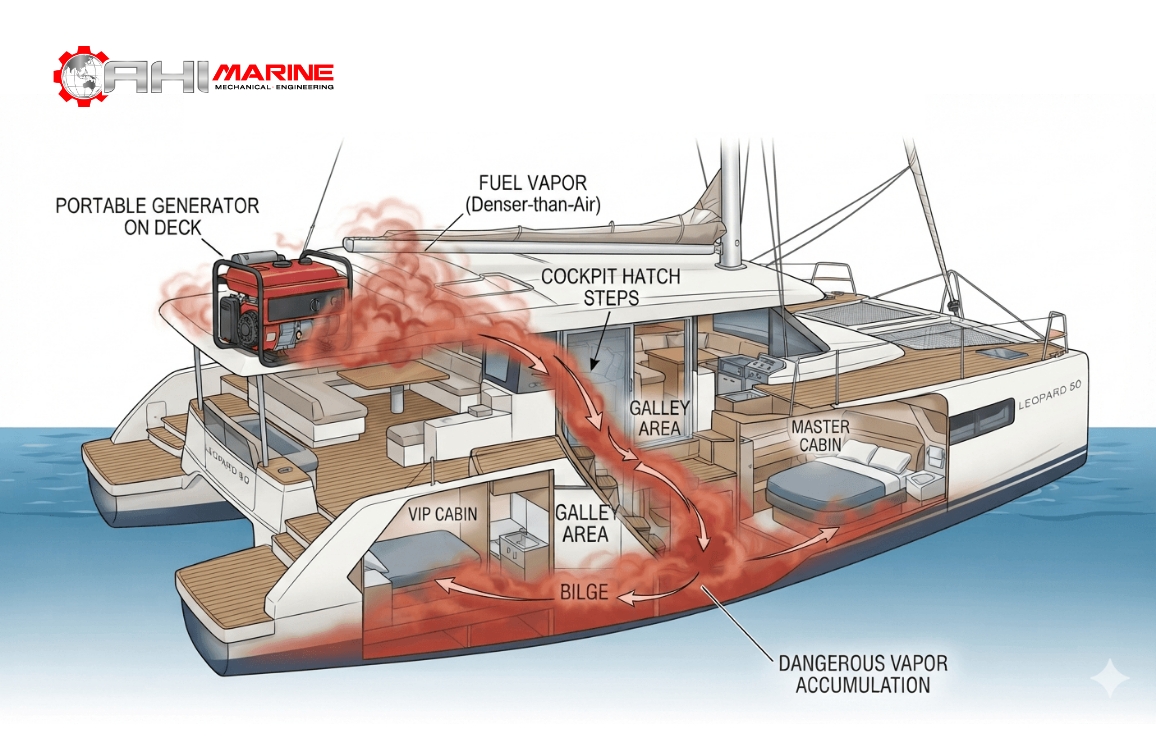
Key dangers of fuel vapours on board your boat
- Vapour Density Split: Air has an average molecular weight of roughly 29 g/mol, while petrol vapours (composed mainly of hydrocarbons like pentane and hexane) range from 72 to 86 g/mol. This makes the fumes significantly denser than the surrounding air.
- The "Liquid" Behaviour: Instead of dissipating or rising into the atmosphere like carbon monoxide or methane, petrol fumes flow downhill. They will roll off the generator case, spill across the deck, drop straight through open hatches, and settle into the bilge.
- The Trap Effect: The hull acts as a solid basin. Without mechanical active ventilation (like a marine-rated ignition-protected bilge blower), these heavy vapours remain trapped indefinitely, waiting for a tiny spark from a battery switch, starter motor, or appliance to ignite.
3. Electric Shock and Electrocution
- The Risk: Water, high humidity, and wet deck environments combined with AC electricity.
- The Hazard: Portable generators often feature a "floating neutral" or lack proper neutral-to-ground bonding and ground-fault circuit interrupter (GFCI) integration compatible with a marine electrical system. Running them in damp conditions or with improper cabling vastly increases the risk of severe shock
4. Flooding and Water Ingress Damage
- The Risk: Exposure to rain, sea spray, waves, or shifting bilge water.
- The Hazard: Getting a portable generator wet can short-circuit the unit, ruin electrical components, or energize the metallic frame of the generator and surrounding boat structures.
Key Takeaways
- Running a portable generator on board a boat is dangerous and puts lives at risk.
- Never run generators on the boat, or shore-side near to doors, vents, windows and hatches. This runs the risk of exhaust fumes and vapours drifting into the vessels confined areas. If you can smell exhaust in the boat, it may also mean the cabin is pooling deadly carbon monoxide (CO).
- Never refuel any generator anywhere aboard the boat; take it to shore and ensure you are a safe distance from other boats and potential sources of ignition.
Always pay attention to marina or mooring-owner rules and regulations on the use of generators, refuelling and the handling of petrol on their sites.
Speak to marine generator specialist