


Marine Heat Exchanger Servicing | Everything You Need To Know
AHI Marine heat exchanger article series
Marine heat exchangers are a serviceable part that should be maintained and serviced at regular intervals.
AHI Marine is based at The Boatworks, Gold Coast and services, repairs and remanufactures marine heat exchangers from all over Australia.
Schedule Heat Exchanger Servicing
What Is a Marine Heat Exchanger?
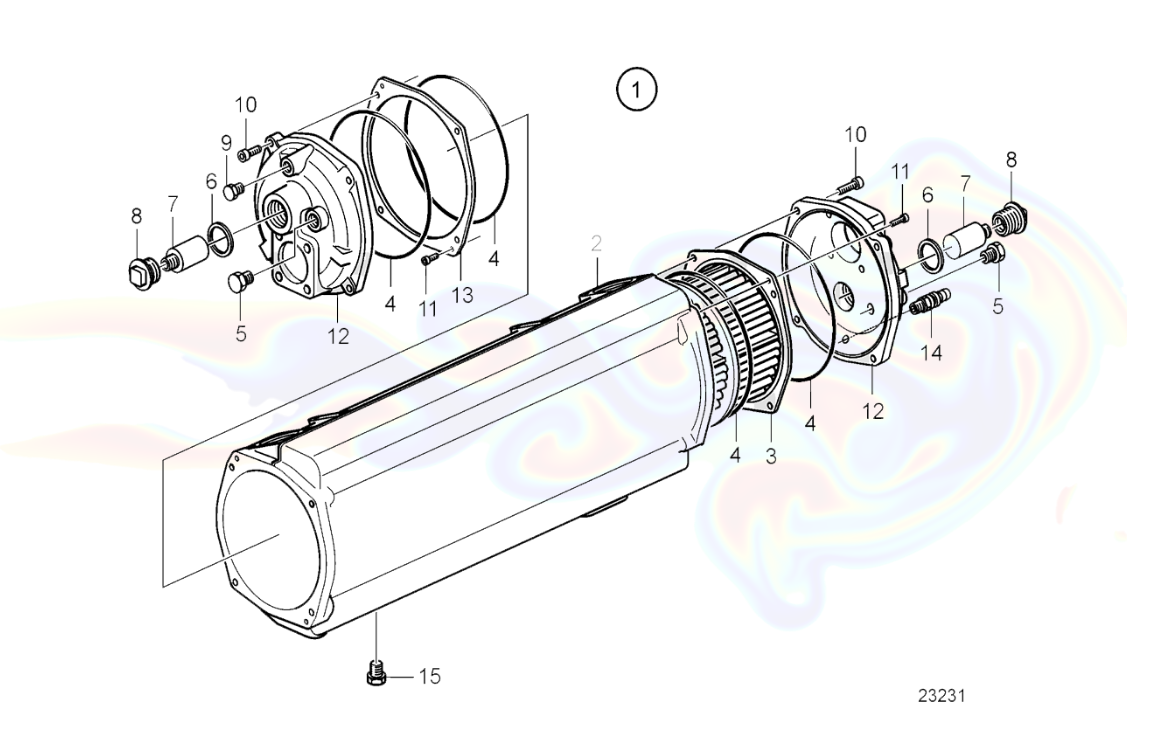
This is an assembly comprised of a closed loop of glycol fluid that circulates around the engine, an open sea water passageway and a tube bundle or tube stack where the two circuits come together to exchange heat.
Cool sea water is pumped through the tube stack and draws away heat from the engines coolant that circulates around the engine block. The hot coolant leaves the engine, passes around the network of fine tubes, exchanges heat with the cooler sea water, and returns to cool down the engine.
The fluids in the two circuits should never mix, and instead heat is exchanged as the hot coolant flows over the cool sea water tubes.
Why Heat Exchangers Are Critical for Engine Performance
Without a heat exchanger the engine would run hot and risk damage. Engines are designed to run within a temperature range for optimum power, reduced wear and fuel efficiency.
Why Marine Heat Exchanger Servicing Is Essential
Engines experience extremes of heat and cold and operate in corrosive salt water and biological environments. These extreme conditions cause corrosion, calcification and the warping of dissimilar metals and interfaces.
Over time marine organisms and algae form a layer inside heat exchanger tubes and pipes due to constant inflow of raw water. Microbial influenced corrosion quickly causes damage if left unchecked.
Common Problems Caused by Poor Maintenance
Poor maintenance increases likelihood of costly breakdowns.
Impact on Engine Efficiency and Lifespan
Poor cooling efficiency will cause engines to run hot and risk damaging component parts and accelerate wear and tear. An engine running hot will experience reduced power efficiency over time and burn more fuel.
Signs Your Heat Exchanger Needs Servicing
- Rust, pitting and corrosion
- Poor water flow
- Engine overheating
How Often Should You Service a Marine Heat Exchanger?
Every two years the manifold should be removed, inspected, cleaned, put back together and pressure tested.
Factors That Affect Service Frequency
- Saltwater: naturally corrosive to many metals.
- Usage: frequently exerting an engine to heavy loads will increase cooling demands and saltwater throughput accelerating corrosion and calcification.
- Environment: extremes of environmental heat and cold as well as levels of dissolved raw water solids, water oxygenation levels, and microorganism levels can affect service frequency.
What’s Included in Professional Marine Heat Exchanger Servicing?
Heat exchangers come to AHI Marine in a variety of conditions from all over Australia. All components are inspected first and a servicing pathway is discussed.
Inspection and Diagnostics
In situ: Larger vessels moored locally in Coomera and Gold Coast marinas can be inspected in situ. The intake pump and exhaust mixing elbow can be removed and a camera inserted to inspect the tube bundle and water pipes.
Rest of Australia: For heat exchangers in Western Australia, Victoria, New South Wales and South Australia first the manifold comes off the vessel and is sent to AHI Marine in Coomera, Queensland where it is inspected and disassembled.
Visual inspection indicates levels of corrosion and wear and tear. Initial diagnosis determines which parts are suitable for remanufacturing and what servicing is required.
Sacrificial anodes are inspected and replaced where necessary to minimise galvanic corrosion.
Chemical Cleaning and Descaling
Chemical descalers: can be applied to dissolve calcium deposits and accumulated scale within the system.
This process targets buildup inside tubes that cannot be removed by flushing alone. Once the descaling solution has broken down deposits, the system is flushed to clear out remaining debris, restoring optimal water flow.
Acid bath: Disassembled parts with extreme corrosion are dropped into phosphoric acid to remove stubborn scale. Once removed further inspection determines suitability for refurbishing and remanufacturing.
Tube Cleaning and Replacement
Tubes are cleaned by flushing out sand, silt, and organic debris that restrict water flow. Scale removal follows, using chemical descalers or mechanical methods to eliminate calcium deposits and buildup inside the tubes. Tubes are replaced where necessary.
Pressure Testing and Leak Detection
Reassembled parts are pressure tested to ensure no leaks and to ensure parts are operational at real world working conditions before being put back into the vessel.
Ceramic Coating
All remanufactured parts by AHI Marine benefit from a final ceramic coating.

Replace or Repair
Given the variety of parts and range of conditions of heat exchangers some parts need to be replaced, and many can be repaired. AHI Marine uniquely offers both service pathways.
Our engineering facility offers a comprehensive remanufacturing process to extend the life of worn components and significantly reduce the cost of repair.
DIY vs Professional Heat Exchanger Servicing
Basic preventative maintenance is always recommended. Whilst boat owners can provide basic routine maintenance those with limited engineering knowledge are encouraged to contact AHI Marine to discuss long term maintenance plans to avoid engine damage and costly parts replacement.
Risks of DIY Maintenance
Choosing the wrong coolant can damage the engine. Always use manufacturer specified coolant. Mixing coolants can result in coagulation and poor cooling performance.
DIY maintenance lacks technical tools like an endoscopic camera to inspect hard to reach areas.
External systems and fixings may look in good working order, but be hiding corroded internal parts, that risk an imminent engine break down.
Benefits of Choosing a Specialist Marine Service Provider
- Reduce costs: remanufacturing component parts is cheaper than straight replacement.
- Extend lifespan: AHI Marine ceramic coats all remanufactured heat exchanger parts which protects them from harsh corrosive environments compared to plain paint alone.
- Save time: refurbishment can be quicker than ordering out of stock parts. Professional servicing prevents breakdowns and reduces likelihood of a vessel spending time moored, waiting to be fixed.
Schedule Heat Exchanger Servicing
Preventative Maintenance Tips for Marine Heat Exchangers
Take advantage of your vessel being moored up by applying a variety of preventative maintenance procedures. Regular cleaning means lower cost through preventing breakdowns. The best way to clean depends on the level of corrosion and whether routine servicing or repair is required.
Regular Flushing and Cleaning
Two common in situ procedures are an acid and freshwater flush.
Acid flush: For heavy build up a chemical descaler (acid) can be pumped and circulated through the raw water system.
Fresh water flush: standard procedure that prevents the build up of limescale, marine organisms and biofouling.
Sea water oxygen gradually depletes in vessels moored up for long periods of time that have no circulation through the exchanger. Adding a chemical biocide kills off the microbes and organisms that cause dissimilar metals to eventually corrode under these conditions.
Monitoring Engine Performance
Regularly monitor engine temperature and visually inspect water intake and exit to ensure no blockages.
Using Quality Coolants and Materials
Always use manufacturer recommended parts and materials or seek advice from a marine engineering professional.
When Should A Heat Exchanger Be Serviced
A heat exchanger should receive regular preventative maintenance from a professional marine engineer. Schedule a call to discuss your service pathway.
FAQs About Marine Heat Exchanger Servicing
How to tell if a heat exchanger is blocked?
Frequently breaking and replacing raw water impellers from excessive back pressure.The engine will run hot and performance will reduce.
Can a blocked heat exchanger damage my engine?
Yes, overheating will damage your engine if left to run for extended periods.
How long can you run a heat exchanger on muffs?
Muffs should only be used for short periods. They lack the sufficient water flow volume and conditions for safe long term engine running.